



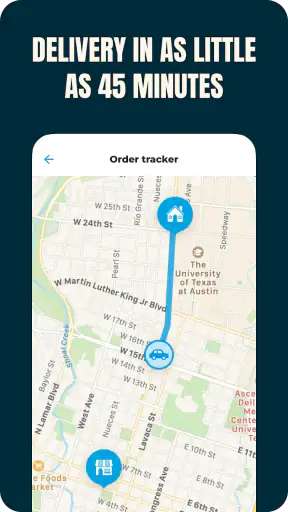

I found Favor: Texas Food Delivery most useful when I treated it as a local ordering companion rather than just another restaurant delivery app. It is a Food & Drink app from NeighborFavor, Inc., built around the simple idea of helping people order meals in Texas. The store summary, “Try us and see how Texas orders in,” gives the right general impression: the experience is meant to feel familiar and practical, especially if you already know what you want to eat and would rather arrange it from your phone.
My first impression was reassuring because the app is free to install and has an Everyone content rating. It is also an established service rather than a brand-new experiment, with a 4.5 average from around 64 thousand ratings and more than a million installs. Those figures do not guarantee that every order will be perfect, but they do suggest that Favor has become a regular part of many people’s food-ordering routines.
What to expect before placing your first order
The most important thing to understand is that Favor is designed around convenience, not culinary discovery alone. You open it when you want food brought to you, browse what is available, and move toward an order without calling several restaurants or driving across town. That makes it especially appealing on busy evenings, during bad weather, or when everyone at home wants something different from the usual quick meal.
I would not approach it expecting the same selection everywhere in Texas. The useful experience depends heavily on where you are and what is serving your area at that moment. A person in a large city may find the app more valuable than someone in a smaller community with fewer participating choices. That is not a flaw unique to Favor; delivery apps naturally become more useful when local coverage and restaurant variety are strong.
The app’s identity also matters. Favor: Texas Food Delivery is not presented as a worldwide marketplace or a general-purpose shopping tool. Its Texas focus gives it a more regional personality than broad delivery platforms. If you live in Texas, visit often, or are ordering for someone there, that focus can make the service feel more relevant than an app that treats every location exactly the same.
Before installing, I would make one practical decision: am I trying to solve a specific meal problem, or am I only browsing? Favor is easy to open casually, but the first meaningful success comes faster when you already have a rough plan. Decide whether you need lunch for yourself, dinner for a household, a comfort meal after work, or a last-minute order for someone else. That small bit of preparation makes the browsing stage less overwhelming.
The app is free, but “free” here refers to getting the application itself. The total cost of an order is a separate consideration, so I recommend treating the checkout screen as the point where you verify the full commitment. Look over the items, quantities, destination, and final amount before confirming. This habit is more valuable than relying on a quick glance at a menu price, because delivery orders can involve more than the food alone.
How I approached the first setup
When I set up Favor, I focused on getting the basics right before browsing deeply. Location is the first practical detail because the app needs to show options relevant to where the order should go. If you are ordering for a friend, family member, or workplace instead of yourself, slow down here and make sure the destination is the one you actually intend to use.
That sounds obvious, but it is one of the easiest ways to create avoidable friction. A familiar home address can become an automatic choice even when you are sending food somewhere else. I found it helpful to think of the delivery destination as part of the order itself, not as a minor setting that can be ignored until the end.
Once the location is correct, I recommend browsing with a purpose. Instead of scrolling through everything immediately, begin with the kind of meal you want and then compare realistic candidates. Favor works better when you use it to narrow a decision than when you expect it to invent your dinner from nothing. If you are feeding several people, check the whole order as a group rather than choosing each item in isolation.
For a first order, keep the selection uncomplicated. Choose a meal you already understand, avoid making the first attempt a complicated customization project, and review the basket carefully. This is not because the app cannot handle variety; it is because a straightforward first order lets you learn the workflow without also troubleshooting unusual requests or a large group order.
The current version is 6.16.0, and the listed minimum operating system is version 9. That makes the app accessible to many older compatible devices, although your own phone’s performance, storage, and operating-system condition can still affect how comfortable it feels. I would update the app normally and keep the phone connected while ordering, particularly if I were placing an order away from home.
The quickest route to a first successful order
My recommended first-use routine is simple: open the app, confirm the destination, choose a familiar restaurant or meal, add only what you need, and inspect the order before submitting it. This sequence sounds basic, but it prevents the common mistake of becoming absorbed in browsing and then rushing through the final details.
A realistic example would be a weekday evening when I finish work late and do not want to cook. I would decide on one dependable meal, check whether the available option suits the household, and make sure drinks, sides, or substitutions are intentional rather than accidental. If someone else is eating too, I would review the basket from their point of view: Is the portion appropriate? Is anything missing? Did I select the right variation?
That final review is where Favor becomes more than a restaurant menu. The app is helping coordinate the handoff between what I want, where it should go, and what I am actually asking to receive. I would verify the delivery address again, then look at the order summary and total before completing the process. If the order is for another person, I would also make sure the recipient knows to expect it.
My first meaningful success would not be discovering an exciting new restaurant. It would be completing an ordinary order without confusion and having the food go to the correct place. For a first-time user, that is the right goal. Once the workflow feels familiar, browsing becomes more enjoyable and experimenting becomes less stressful.
One useful habit is to take a moment after ordering to remember what worked. Was the restaurant easy to find? Did the menu make sense? Was the portion suitable? Did the delivery destination require extra care? These observations help with the next order because you can repeat the parts that were smooth instead of starting from zero every time.
Where new users can get confused
The biggest source of confusion is the difference between seeing a food option and being ready to receive it. A restaurant or item may look appealing during browsing, but the practical question is whether it fits your location, timing, group size, and budget. I try not to treat the first attractive result as the final answer. I compare it with at least one alternative when the meal matters, especially if I am ordering for several people.
Another common problem is assuming that the app’s convenience removes the need to check details. It does not. A delivery platform can make ordering faster, but it cannot know whether you meant to choose a particular size, side, flavor, or quantity unless your selection is clear. I read the basket as if I were checking a paper receipt. That catches small mistakes before they become a disappointing dinner.
Address confusion deserves special attention. Ordering for yourself is relatively straightforward, but sending food to an office, hotel, apartment building, or another household requires more thought. I would confirm the destination and make the recipient’s situation clear through the available order instructions. If the location is busy or difficult to identify, I would avoid placing the order until I knew the recipient could actually receive it.
People also sometimes confuse the app’s free download with a promise that every order will cost the same as buying directly from a restaurant. I would not make that assumption. The sensible comparison is the complete checkout total against the time and effort saved. For a rushed evening, the convenience may justify the difference. For a large order or a tight budget, picking up the meal or ordering directly may be the better choice after comparing the final amounts.
Favor is not automatically the right tool for every occasion. If I am already near the restaurant, pickup may be quicker and more economical. If I need a very specific dietary conversation with staff, calling the restaurant directly can provide more confidence than relying on an in-app selection. And if the local choices do not match what I want, a competing delivery service or direct restaurant ordering may offer a better route.
Practical ways to get more from the app
My first tip is to build a repeatable decision process rather than endlessly browse. Start with the occasion, then the distance or convenience you need, then the meal type, and only afterward consider novelty. This keeps Favor useful on ordinary days when you do not have the energy to compare every option.
My second tip is to separate personal orders from group orders mentally. For one person, speed and familiarity may matter most. For a household, accuracy matters more: count the diners, check shared items, and make sure the basket reflects the group rather than one person’s appetite. A small amount of planning can prevent the frustrating situation where the order arrives and everyone realizes that one essential item was overlooked.
My third tip is to use the app as a planning aid before you are desperate for food. If I wait until I am extremely hungry, I am more likely to choose quickly, overlook a detail, or accept an option that does not really suit me. Opening Favor a little earlier gives me time to compare the available choices and decide calmly. This is especially helpful when ordering for a family or arranging food for someone who is not beside me.
A less obvious trade-off is that regional focus can be both a strength and a limitation. The Texas orientation makes the service feel targeted instead of anonymous, but it also means the app is most relevant to people whose regular routines are tied to Texas. Someone who travels constantly across different states may prefer a broader service with a more consistent experience from one destination to another.
Another useful distinction is between convenience and control. Favor reduces the work of getting food, but direct ordering can sometimes give you a clearer relationship with the restaurant. If an order involves unusual instructions, allergy concerns, or a complicated event, I would choose the channel that gives me the confidence I need, even if it takes longer. For a familiar everyday meal, the app’s convenience is much more compelling.
Who will enjoy Favor, and who should skip it?
I think Favor is a strong fit for Texas residents who want a straightforward way to arrange restaurant food without making a phone call or driving out. It is also useful for people who regularly order after work, parents coordinating dinner, students sharing a meal, and anyone sending food to a friend or relative in the area. The free entry point makes it easy to try without committing to a purchase before you know whether the local experience suits you.
It can also help people who value a regional service identity. The app’s developer is NeighborFavor, Inc., and the Texas-centered positioning is more specific than the broad, interchangeable feel of many delivery platforms. That does not automatically make it better, but it gives Favor a clear reason to exist in a crowded category.
I would be more cautious if I lived somewhere with limited local availability, needed the absolute lowest possible total, or preferred to speak directly with restaurants about every order. People who dislike browsing menus on a phone may also find the convenience less important than simply calling a nearby restaurant. In those cases, pickup, direct ordering, or another service may be a better fit.
The Everyone rating makes the app broadly approachable from a content standpoint, but that does not mean every ordering situation is equally suitable for every household. Adults should still help younger users understand the destination, order contents, and final cost. The app can simplify the mechanics, while the person placing the order remains responsible for checking the important details.
My next-step recommendation
After a successful first order, I would not immediately turn Favor into my only food app. I would use it for a few different situations: one simple personal meal, one order for more than one person, and one order sent to a different destination. That gives a much clearer picture of whether it fits your routine than a single lucky experience.
Pay attention to the parts that matter to you personally. If your priority is saving time, note how quickly you can move from opening the app to a confident checkout. If your priority is choice, compare the local selection with the restaurants you normally use. If your priority is value, compare the complete order cost with pickup or direct ordering rather than judging only the menu prices.
Favor: Texas Food Delivery has earned a substantial audience, including around 14 thousand written reviews, and I can understand why it appeals to people who want a familiar food-ordering path in Texas. Still, its usefulness depends on local options and on how carefully you review the order. I like it best for ordinary, time-sensitive meals where convenience matters more than maximum control.
My honest recommendation is to install it when you have a real meal in mind, not simply because you are curious about another delivery app. Confirm the destination, start with an uncomplicated order, inspect the final summary, and judge the service by how well it handles your actual routine. If it makes a busy evening easier without creating new uncertainty, it has done its job. If pickup or direct ordering gives you better value or clearer communication, there is no reason to force Favor into situations it is not designed to solve.


